My Python Programming Learning Journey
-
Foundation 1: "Programming Fundamentals: Mastering variables, data types (Strings/Numbers), and basic syntax logic."
-
Foundation 2: "Algorithmic Control Flow: Implementing conditional logic (IF/ELSE), comparison operators, and advanced string slicing.
Phase 1: Foundation 1 & 2
-
Intermediate 1: "Data Structures & Iteration: Developing complex logic using Lists, Dictionaries, and optimized Loop structures."
-
Intermediate 2: "Functional Programming: Architecting reusable code using custom functions, variable scoping, and keyword arguments."
Phase 2: Intermediate 1 & 2
Phase 3: Intermediate 3 & 4 (Where I am learning right now)
-
Intermediate 3: "Systems & Optimization: Managing file processes, modular programming, and code efficiency techniques."
-
Intermediate 4 (Current): "Graphic Engines & Simulation: Building 2D environments using the Turtle and Pygame libraries, focusing on collision physics and sprite management."
-
Explorer 1: "GUI Development: Designing interactive User Interfaces and event-driven widget programming."
-
Explorer 2: "Data Science & Analytics: Leveraging the Pandas library for large-scale data manipulation, dataframe management, and computational analysis."
Phase 4: Explorer 1 & 2 (The Future)
From Blocks to Code
I am moving from using LEGO blocks to writing real code with Python. I enjoy designing smart software that uses logic to solve real-world problems.
Current Milestone: Advanced Programming Track
I’m using what I learned with LEGO Spike Prime to help me master Python. I am building a strong foundation now so I’m ready for advanced robotics and engineering in high school.
Academic Track
Intermediate 4 (Professional Python Track)
Current Level
Training Institution
The Brainery Code Academy
Key Proficiencies
Proficiency in data structure manipulation, algorithm optimization, and complex Boolean logic.
Project: Inventory Management System
Albert's Fruit Shop
A functional application designed to manage real-time stock levels and customer transaction workflows using Python.
Dynamic Control: Implemented automated list synchronization to ensure inventory accurately reflects user purchases in real-time.
I wrote a program that uses loops to keep tasks running smoothly and improved the "stop" rules so that everything shuts down correctly without any errors.
Project: Strategic Algorithm Design
Intelligent Gaming Engine
Leveraging randomization and input validation to build resilient, AI-driven interactive software.
Error Resilience: Implementing try-except blocks within data input functions to handle invalid user types gracefully and maintain program flow.
Deep Dive: I designed a precision scoring algorithm that manages floating-point drawing logic, exploring how Python handles numeric data types in competitive scenarios.
Project: Project Run
I developed a smart line-following robot that automatically adjusts its speed to stay steady and fast when moving over slopes and difficult paths.
Robot Run: Smart Line Tracing
(Zig-zag path)
I developed a smart line-following robot that automatically adjusts its speed to stay steady and fast when moving over slopes and difficult paths. (The line is zig-zaged.)
Robot Run: Colour Sensor Line Tracing


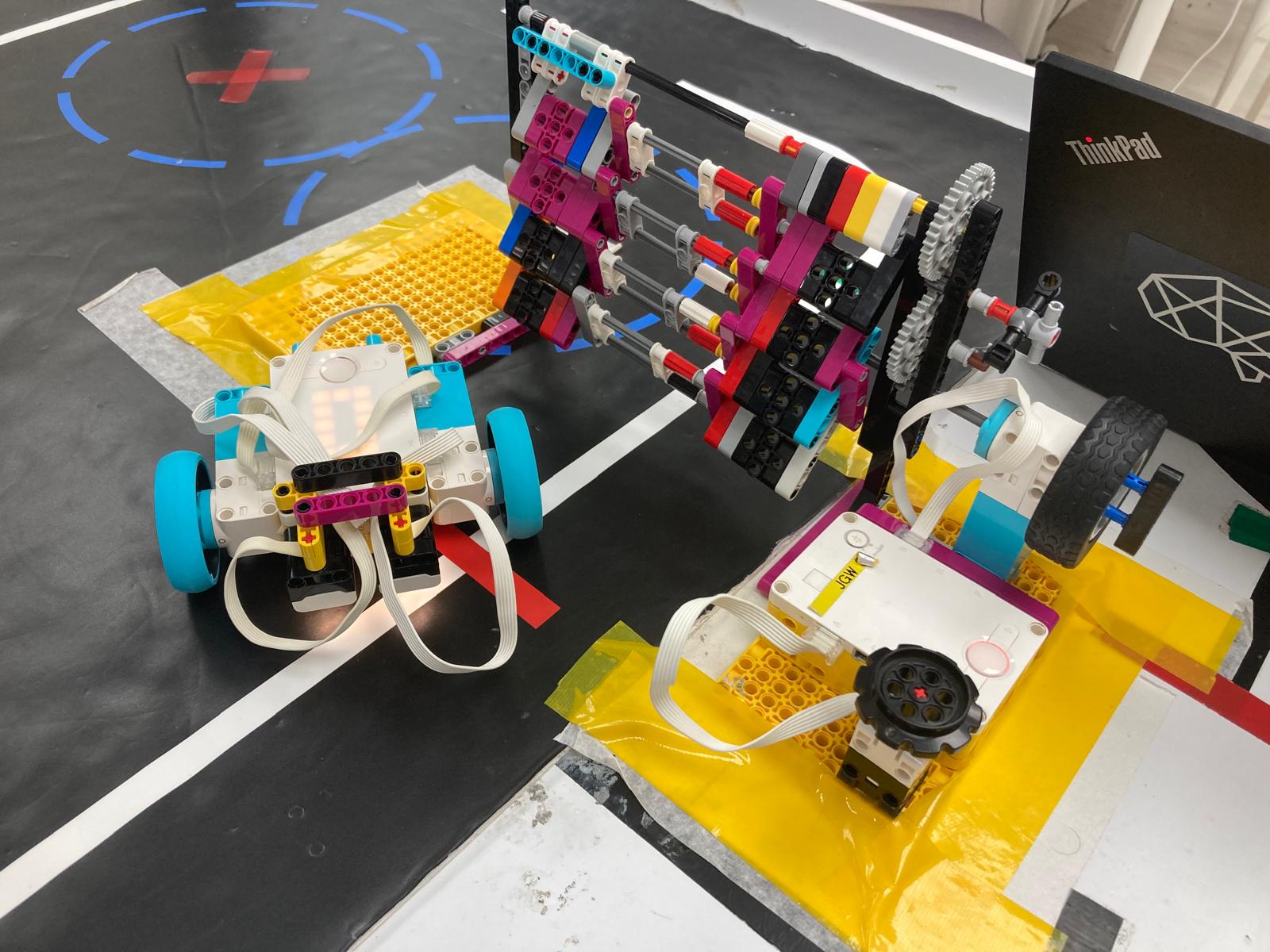
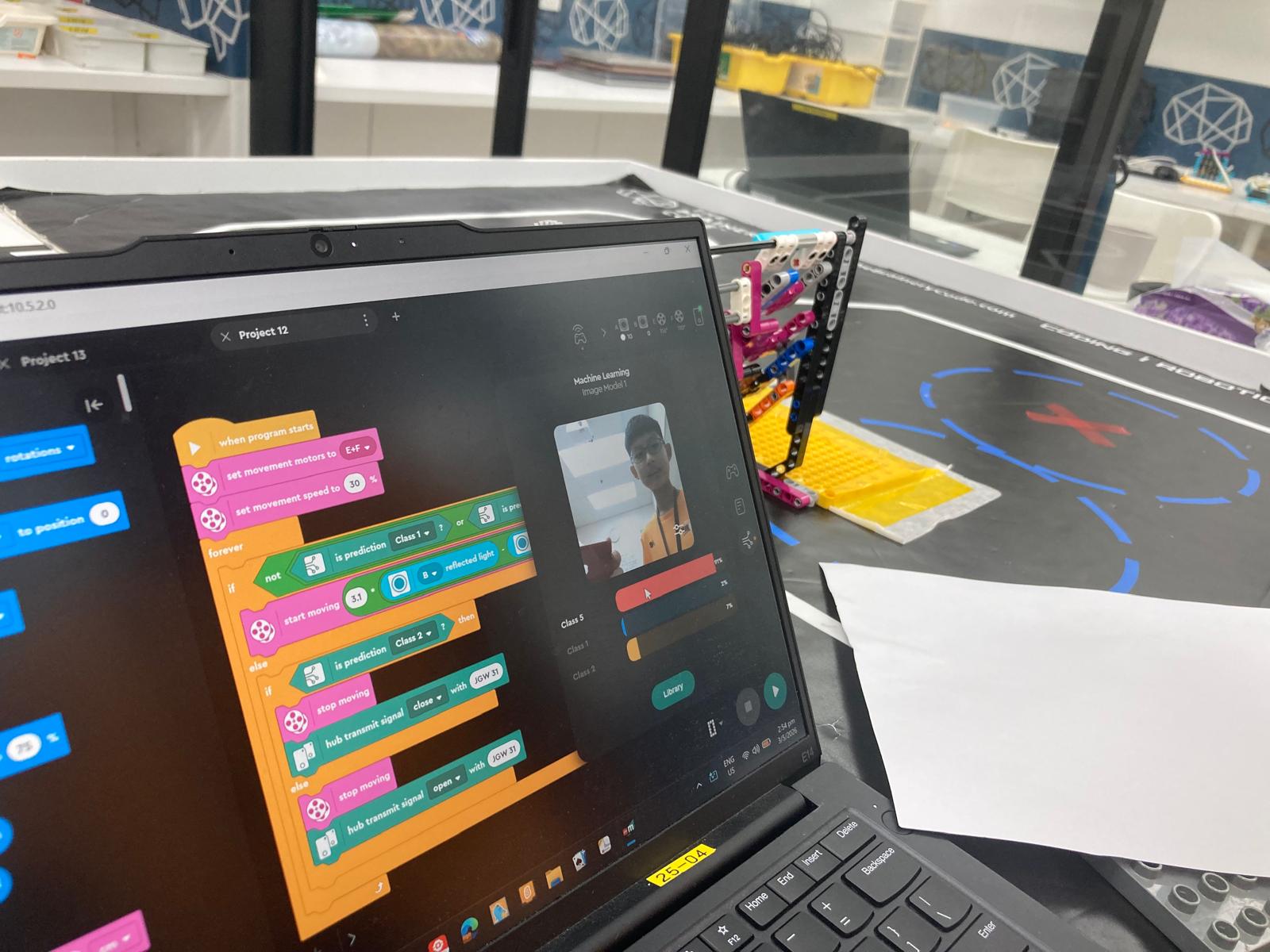
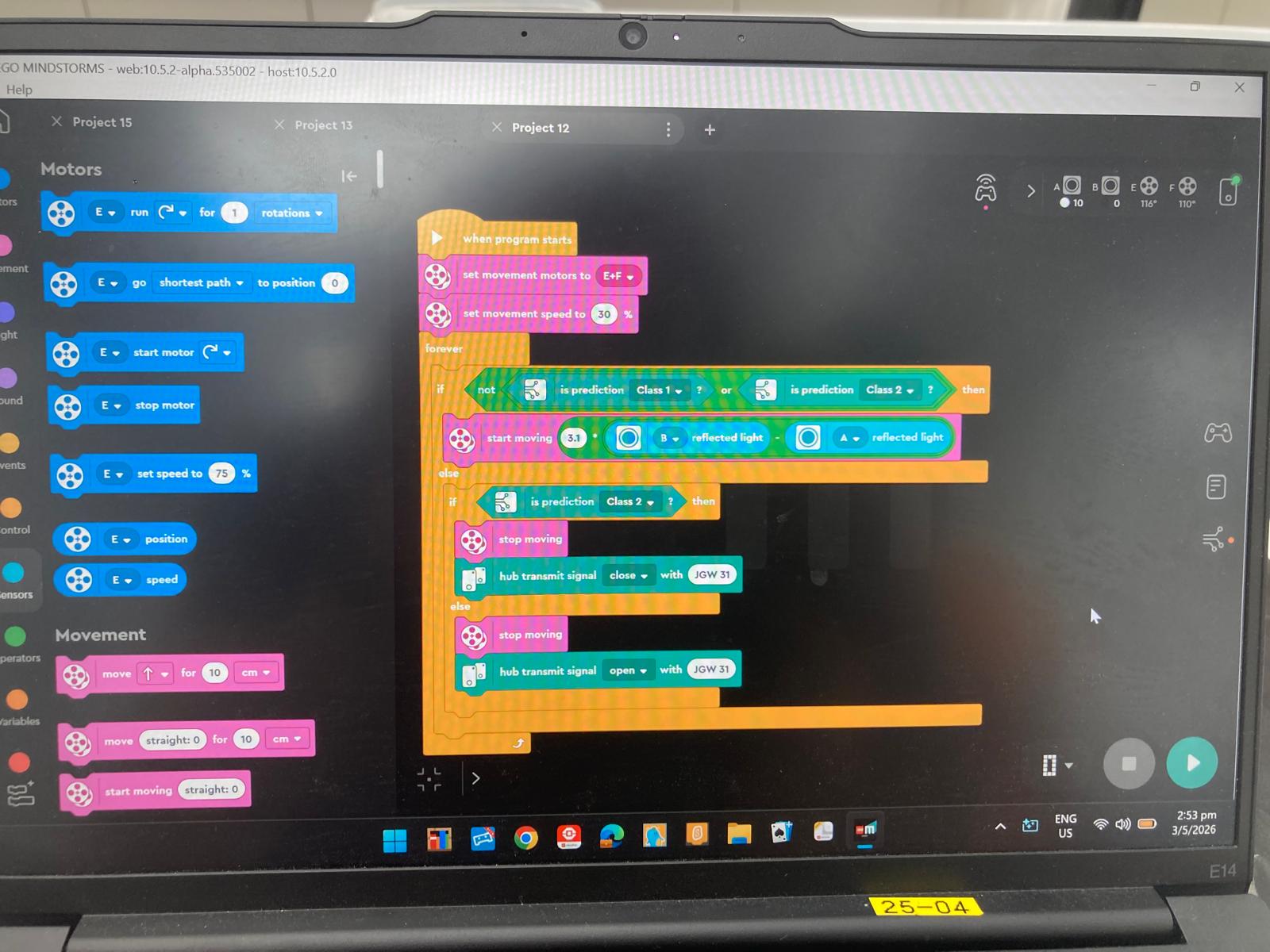
I have done another project on robot run using colour sensor to perform line tracing. Using hub-to-hub communication, I am able to operate the gate opening and closing process. (With poportional line tracing.)
Future Goals: Robotics and Python
Secondary 1 Goals
Looking ahead, I plan to use my Python coding skills to build even better robots. My goal is to combine smart software with robot hardware to create advanced systems. I want to be ready for the high-level robotics competitions in secondary school.